
Video analysis
Do AI Boxing Apps Actually Work? What Video Analysis Can and Cannot Tell You
AI boxing apps can help you compare visible technique across similar clips. Learn what video can show, what it cannot prove, and how to test feedback safely.
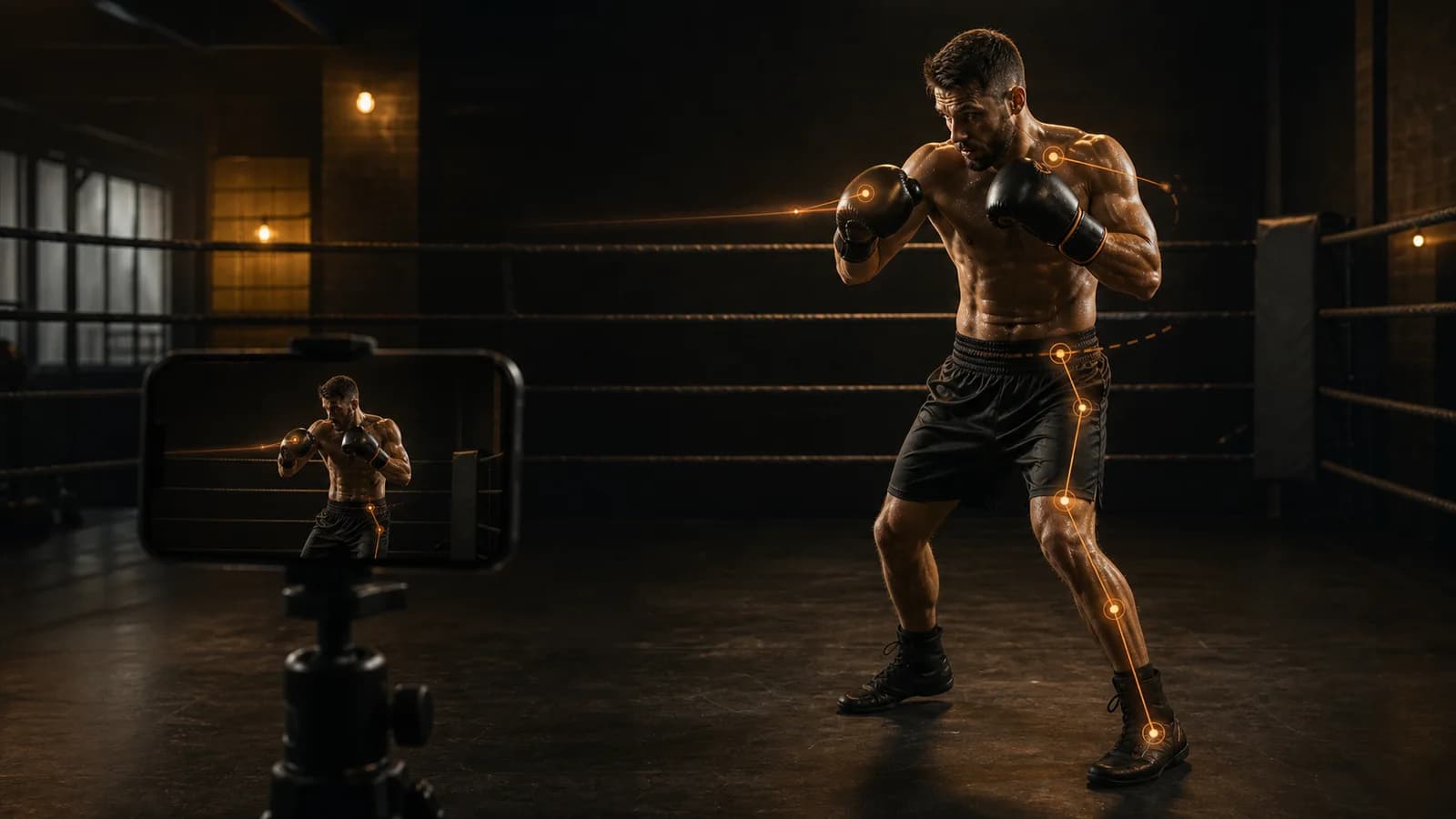
AI boxing apps can work as video-review tools, but they cannot replace a coach or prove that a punch is powerful, safe, or tactically correct. A useful app helps you compare visible positions and repeated patterns: where your hands return, whether your feet stay under you, and whether the same fault appears in comparable rounds. It should turn that observation into one test for your next session.
The honest test is simple: does the feedback point to something you can see, repeat, and check again? Treat any verdict that goes beyond the camera’s evidence with caution.
What an AI boxing app can see
A clear phone video can preserve details that you miss at full speed. You can pause the clip and inspect:
- your stance width and balance before you punch;
- your lead hand’s path and return to guard;
- whether your rear heel, hip, and shoulder turn in sequence;
- whether your head stays on the same line after a combination;
- whether you finish in position to defend or move.
These are visual checkpoints, not a complete assessment. The IBA Coaches Manual explains boxing technique as coordinated work across stance, movement, offense, and defense. One frame can reveal a position; a sequence shows how you arrived there.
Use our boxing stance guide and jab guide to define the checkpoint before you record. A specific question such as “Does my rear hand return before I step out?” produces a more useful review than “Is my boxing good?”
What video cannot prove
A single camera angle cannot honestly establish:
| Claim | Why the clip is insufficient |
|---|---|
| Real punching power | A phone image does not measure force at contact |
| Reading an opponent | A solo clip cannot reproduce live reactions or pressure |
| The cause of pain | Video cannot diagnose an injury or medical condition |
| Sparring safety | The frame may hide contact, fatigue, coaching context, or rule violations |
| Competition readiness | Readiness also depends on live skill, conditioning, tactics, and qualified judgment |
Slow motion also changes how timing feels. It helps you inspect order and position, but you should always watch the full-speed round first. If the clip cuts off a foot, glove, opponent, or landing point, mark that part as not visible instead of letting an app fill the gap with confidence.
Run a fair three-clip test
- Choose one drill. Use a controlled jab-cross, a defensive exit, or one short bag combination.
- Fix the camera. In a US gym, start about 6–10 feet away at hip-to-chest height. Keep both feet, both gloves, and the full return in frame. Place the tripod outside the active lane.
- Keep conditions comparable. Record the same angle, round purpose, equipment, and approximate intensity.
- Write one visible prediction. For example: “My right glove returns to my cheek before my lead foot moves.”
- Test one cue. Repeat the drill and see whether the checkpoint changes without creating a new balance problem.
Do not compare a fresh technical round with the last hard conditioning round and call the difference an app result. Do not compare a front view with a side view as if they show the same evidence. The setup matters as much as the software.
Turn feedback into the next round
Good feedback uses verbs. “Bring the rear hand home before the exit” gives you an action. “Technique: 72” does not tell you what to change.
Use this loop:
- Watch once at full speed.
- Check one phase frame by frame.
- Record one visible observation.
- Choose one cue for the next round.
- Film again from the same position.
Keep the cue only if you can reproduce the change. If the next clip disagrees, check the angle, distance, fatigue, and drill before you assume your form changed. Our filming guide helps you build a repeatable setup, and the Boxing Session Builder helps you assign one technical task to a round.
When to ask a coach instead
Take the clip to a qualified boxing coach when you cannot tell why a fault appears, when the change involves sparring tactics, or when you need live feedback about distance and reactions. Ask a medical professional about pain, dizziness, suspected concussion, or injury; an app should not answer those questions.
For amateur competition, follow the current rules and medical requirements of USA Boxing or the sanctioning body that governs your event. A video-review workflow can support practice, but it does not clear you to compete.
How to judge an AI boxing app
Before you pay, check five things:
- Does it explain which part of the clip supports the feedback?
- Can you compare similar clips instead of chasing one score?
- Does it state what the camera cannot see?
- Can you turn the result into one training action?
- Does its current store privacy label match how you plan to use training footage?
The current App Store listing for Boxing AI: Ring Coach documents video analysis, technique feedback, training history, and fight-camp tools. It does not make a phone camera equivalent to a ringside coach. That distinction is the standard every AI boxing app should meet.
Bottom line: use AI to compare visible technique, organize observations, and choose the next test. Use a qualified coach for causes, tactics, live pressure, and competition decisions. If an app cannot show you the evidence behind a correction, treat the correction as a hypothesis—not a verdict.