
Technique
How to Check Your Boxing Form From Video
Check your boxing stance, punches, guard return, balance, and exits with a two-angle video review that gives you one clear task for the next round.
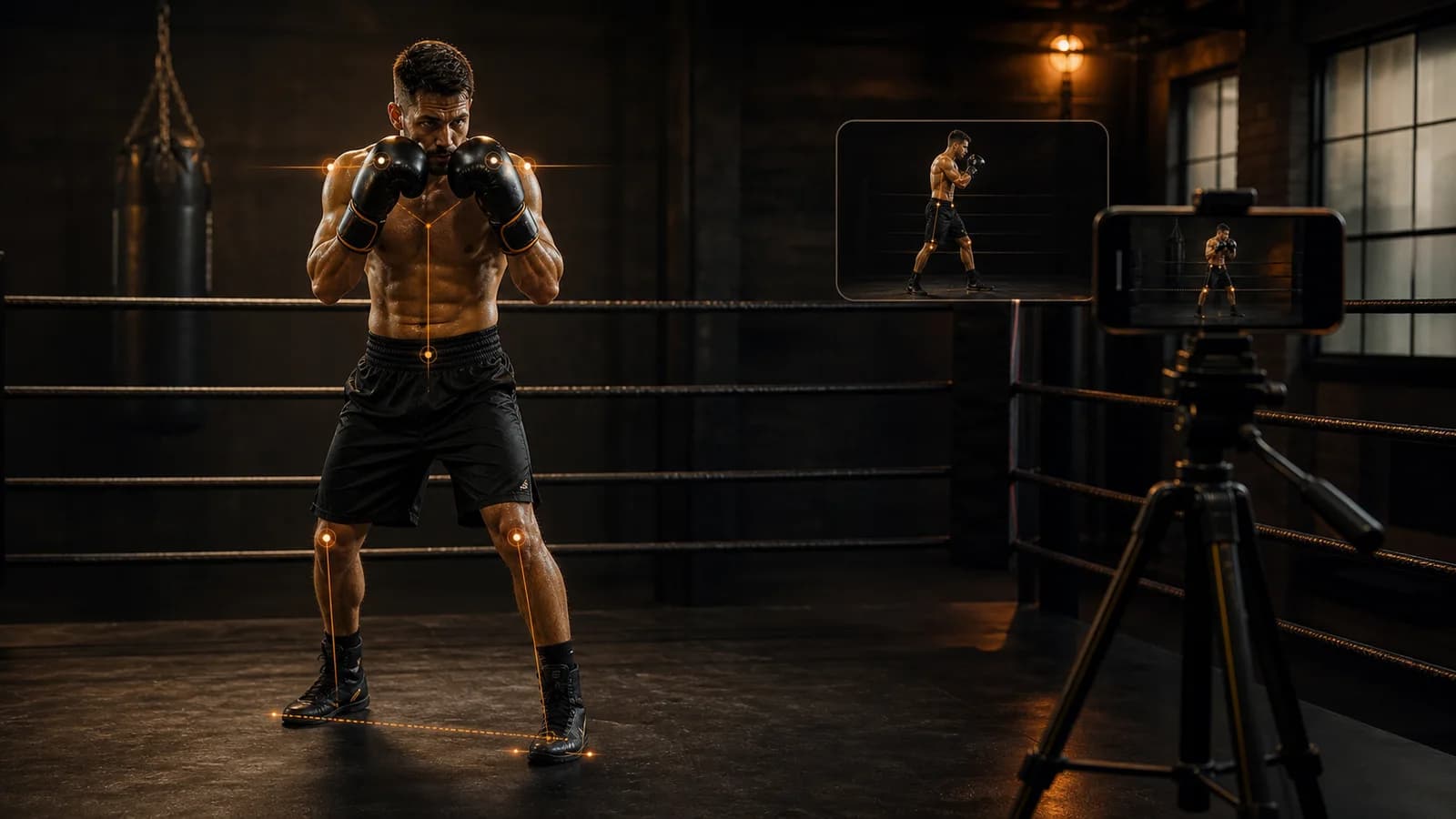
Check your boxing form from two stable video angles: a front three-quarter view for stance width and guard, then a side view for posture, weight transfer, and recovery. Review the start, the punch, and the finish separately. Your form is usable when you can repeat the same balanced positions at controlled speed—not when one frame merely looks sharp.
Choose one movement before you record. A jab, a jab-cross, or a simple step-and-return gives you enough information without hiding the problem inside a long combination.
Use this three-phase checklist
| Phase | What to check | Useful question |
|---|---|---|
| Start | Stance, guard, chin, weight distribution | Can you move in every direction without resetting your feet? |
| Action | Punch path, rotation, head position, base | Do you stay organized while the punch travels? |
| Recovery | Hand return, balance, defensive position | Can you defend or move immediately after the punch? |
The IBA Coaches Manual treats stance, movement, attack, and defense as connected skills. Review the whole sequence. A correct-looking fist at full extension does not help if you crossed your feet before it or fell forward afterward.
Film two useful angles
For the first clip, place your phone about 6–10 feet away at roughly hip-to-chest height. Use a front three-quarter angle—about 45 degrees—so you can see both feet, both gloves, and your torso. This angle works well for stance width, guard symmetry, lateral balance, and the return after a combination.
For the second clip, move the phone to a true side view without changing the drill. Use it to inspect your spine, head position, reach, rear-leg contribution, and whether your weight continues past your front foot.
Keep the tripod outside the ring or training lane. Do not balance the phone on a bag, stool, or ring apron where you or another boxer can hit it. Ask permission before you record anyone else.
Read the filming guide before you set the camera. If you change the angle, drill, speed, and fatigue at once, you cannot tell what caused the visual difference.
Check your stance before the punch
Pause before you move and ask:
- Are your feet far enough apart to support movement, but not so wide that you feel stuck?
- Can you see a stable bend in both knees without sitting too low?
- Do you keep your hips and shoulders organized for your chosen orthodox or southpaw stance?
- Do your gloves protect useful lines without blocking your vision?
- Can you take a short step without bringing your feet together or crossing them?
Use the boxing stance guide for a fuller review. Body proportions and coaching systems differ, so do not copy another boxer’s exact foot spacing. Check whether your stance lets you punch, defend, and move without an extra reset.
Check the jab or cross in motion
Watch once at full speed, then move frame by frame. For a jab, check whether you travel directly to the target, keep the rear hand available, and return the lead glove before you begin the next action. Our jab technique guide gives you the full sequence.
For a cross, look for coordinated rotation rather than one body part moving alone. Check whether you push and turn from the floor while keeping enough balance to recover. Do not use a frozen image to declare that one heel or shoulder must occupy an exact universal position. Your drill, range, stance, and coach’s system affect the shape.
Video can show a position and its order. It cannot prove real impact force, explain pain, or tell you how the movement will hold up against an opponent.
Check the finish, not only the punch
Many form reviews stop at extension. Continue until you return to guard or leave the exchange.
Look for three outcomes:
- You bring the punching hand back to a defensive position.
- You finish with your head and feet ready for the next action.
- You can step, slip, block, or punch again without a large balance correction.
Write what you see: “My rear hand drops before the jab returns” is useful. “My form is bad” is not. If the camera hides the hand or foot, mark it as not visible.
Compare like with like
Record two or three attempts with the same angle, drill, and approximate intensity. Choose one early error because it may affect everything that follows. If your lead foot turns before your weight shifts, test that before you add a separate cue for your guard and head.
Use the Boxing Session Builder to give the next round one task. Refilm it from the same position. Keep the change only if you can repeat it without creating a new problem.
Know when video is not enough
Ask a qualified boxing coach when you cannot identify the cause of a position, when you need live distance or tactical feedback, or before you apply a new movement in hard sparring. Seek medical care for pain, dizziness, suspected concussion, or injury.
For amateur bouts, follow the current medical and competition requirements of USA Boxing or the body sanctioning your event. A video form check supports training; it does not clear you to compete.
The current App Store listing for Boxing AI: Ring Coach documents video analysis and technique feedback. The honest standard remains the same for any review method: check what the camera actually shows, change one thing, and verify it again.
Bottom line: your boxing form is moving in the right direction when you can repeat a balanced start, organized action, and defensive finish under comparable conditions. Use video to make the next practice question smaller and clearer.