
Technique
How to Stop Dropping Your Jab Hand: A Video Review Protocol
Find exactly when your jab hand drops, test one correction at a time, and rebuild a direct return to a usable guard.
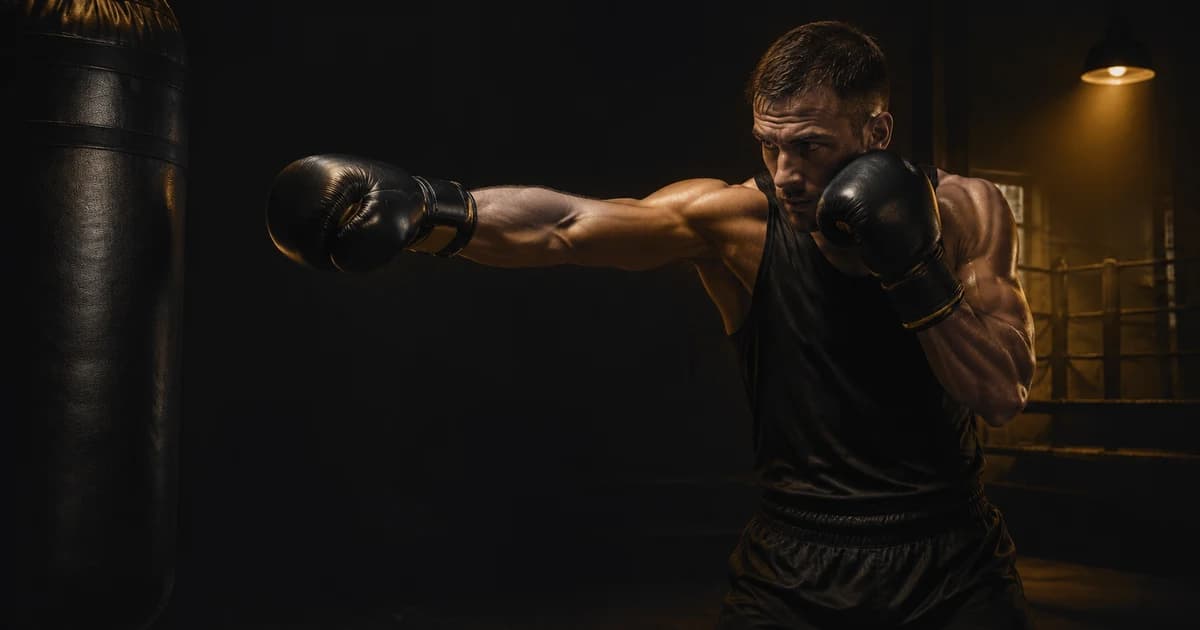
If you drop your jab hand, first identify when you drop it. You face three different review problems when you start with a low glove, lower it during extension, or return it below its starting position. Do not fix all three with one vague instruction such as “keep your hands up.” Film a controlled set, locate the earliest visible change, and test one correction.
In the IBA Coaches Manual, IBA instructors describe the basic straight punch with the chin protected, the opposite hand guarding, and the punching hand returning to its starting position. They also list a low or sideways retraction and a slow return as common basic-punch errors. Use those points as a beginner reference, not one compulsory style for every tactical exchange.
Identify which drop you actually have
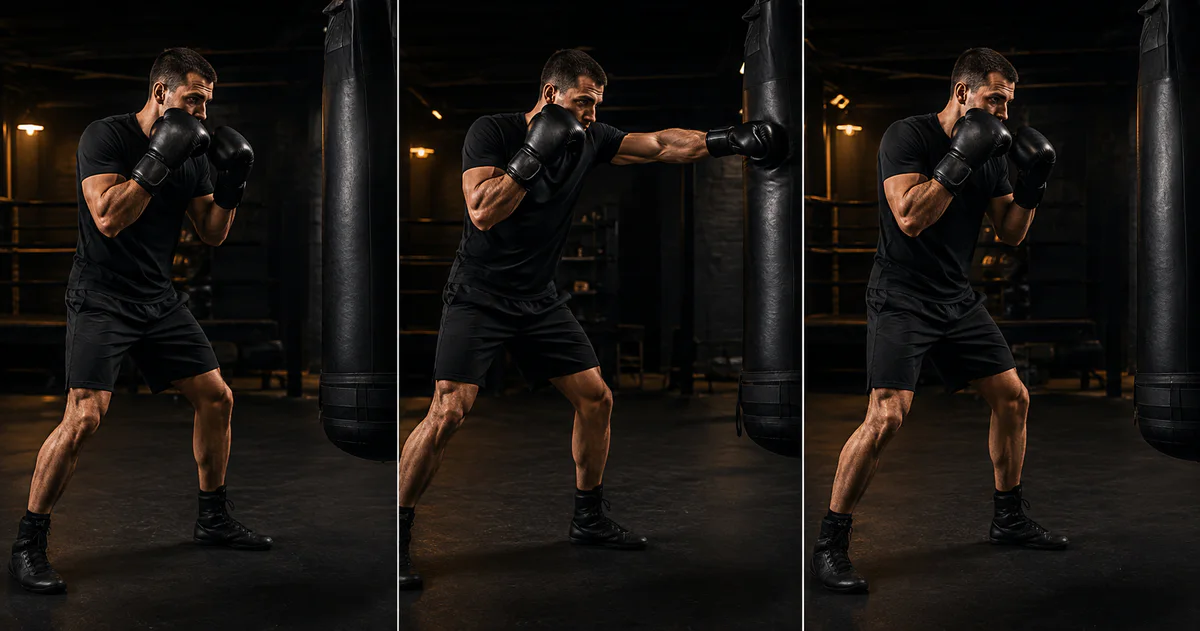
Compare the same stance and camera angle. Look for the first frame where the lead glove leaves its intended path.
Record three to five single jabs at a pace you can repeat. Pause one representative repetition at four moments:
- Before you initiate the jab.
- Halfway through extension.
- At your farthest controlled reach.
- After you complete the return.
Compare the lead glove with a stable reference such as your cheek, shoulder, or a fixed point in the background. Ask one question at each frame.
| Review moment | What you can observe | What you cannot conclude |
|---|---|---|
| Start | Whether you already hold the glove below your chosen baseline | Why you chose that guard |
| Extension | Whether you lower the glove before reaching the target | Whether tension or fatigue caused it |
| Full reach | Whether you keep your head and rear glove organized | How hard the punch landed |
| Return | Whether you bring the glove directly back or loop it downward | Whether an opponent would counter successfully |
Do not label the whole jab “bad” because one frame looks unfamiliar. Write the smallest literal observation you can defend: “I returned my lead glove below my shoulder in four of five repetitions.”
Film the return, not just the impact
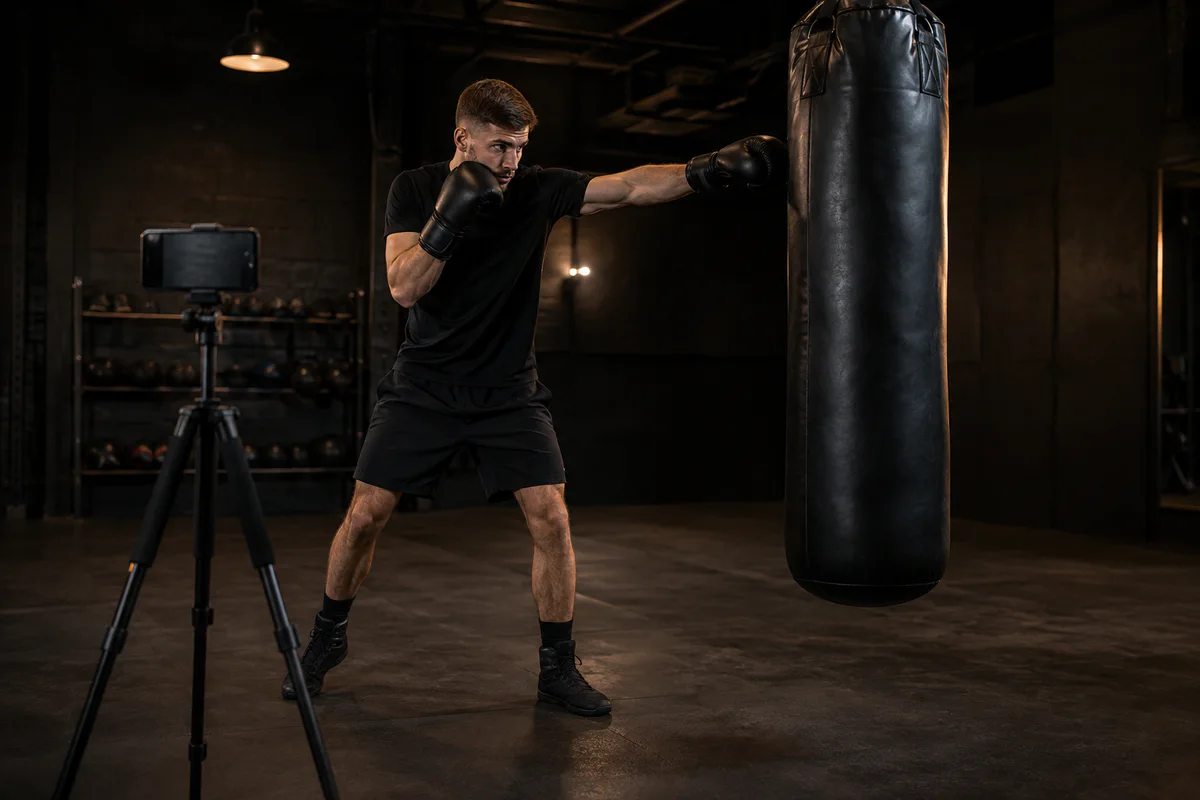
Keep your head, both gloves, hips, and feet in frame so you can review the complete action.
Place your camera around chest height at a front-side 45-degree angle. Keep both gloves, your head, your hips, and both feet in frame. From a side view, you can compare extension and return more easily. From a front view, you can identify lateral drift, but you lose depth.
Use the same camera position for the baseline and correction sets. The lead-straight biomechanics study used synchronized motion capture, force platforms, and target sensors to measure movement that you cannot quantify with ordinary phone video. You can use your clip to review paths and positions. You cannot use it to calculate effective mass, force, joint loading, or a hidden muscular cause.
Follow the site’s boxing filming guide before you compare takes. If the entire return happens outside the frame, record again instead of guessing.
Choose the earliest visible error
Work from the beginning of the movement toward the end.
You start with a low glove
Establish a repeatable starting guard before you punch. Hold it for one second, throw one jab, and return to the same usable position. Do not force a universal hand height if your coach teaches a different guard. You need a stable reference you and your coach can compare.
You lower the glove during extension
Reduce speed and reach. Aim at a point directly in front of the glove rather than reaching down toward a low target. Test the instruction “send the glove through the target line” for three repetitions. If the target itself sits too low, move it before changing your technique.
You drop the glove after extension
Use “straight out, straight back” as the only instruction. Throw three single jabs without adding a cross. A combination can conceal a poor return because you begin the next action before you restore a functional defensive position.
Run a two-set correction test
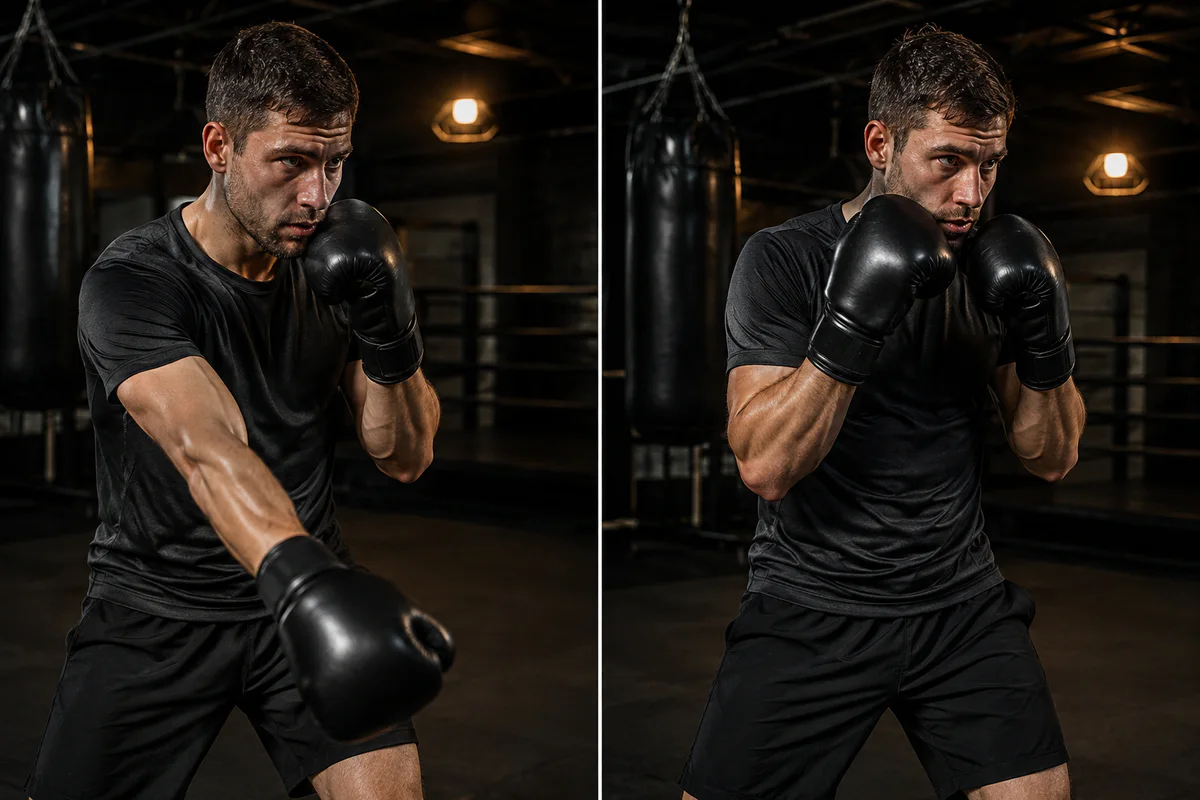
Change one instruction between sets. Compare the return position without changing distance, camera, or pace.
Use this compact protocol:
- Set A: five single jabs at controlled speed.
- Observation: record the earliest repeated drop.
- Revision: choose one short external task.
- Set B: three single jabs under the same conditions.
- Decision: keep, simplify, or ask your coach to assess it.
Motor-learning researchers distinguish knowledge of results from knowledge of performance. In a systematic review of augmented feedback, researchers found that visual and other external feedback can support learning, but the evidence varies across tasks and populations. Because of that uncertainty, use a restrained approach: use video to isolate one visible change, not to flood yourself with corrections.
Add movement only after the standing test
IBA's coaching progression starts with single punches from a standing position before adding forward, backward, and lateral steps. Once you return your glove directly during a standing jab, add one small step. Preserve the same target, pace, and camera angle.
If the drop returns, remove the step and practise the movement separately with the boxing footwork drills. If the return remains controlled, connect the jab to one simple follow-up from the beginner combination guide.
Check whether fatigue changes the pattern
Do not treat a fresh technical set and a fatigued set as equivalent. Researchers who studied trained and amateur boxers reported that fatigue can alter lower-body force production and punch output, especially in punches that rely more heavily on trunk rotation. See the fatiguing-exercise study and the newer lower-limb kinetics study.
If you want to examine consistency, record one fresh set and one later controlled set. Do not chase power when tired. Compare only the return path and your ability to regain a usable stance. Stop if you feel pain, dizziness, confusion, visual disturbance, or unusual loss of coordination. The CDC concussion symptom guide explains the symptoms and danger signs that require urgent care. You cannot use video analysis to clear yourself to continue training.
Use Boxing AI for one narrow question
You can use Boxing AI to review visible boxing technique and keep your training notes together. You cannot use it to determine why you dropped your hand, evaluate pain or contact outside the frame, or provide in-person tactical context.
Bring your coach a usable review packet
Do not hand your coach a long clip and ask whether everything looks right. Prepare a small packet that makes the decision easy:
- one baseline set and one revised set;
- the same camera position, target, distance, and pace;
- one written observation with a repetition count;
- the exact instruction you tested;
- the next action you could or could not complete.
For example: “In Set A, I returned below my starting guard in four of five jabs. In Set B, I used ‘straight back to the cheek’ and did it once in three jabs. I did not add another punch.” That report separates evidence from success language. Your coach can decide whether the instruction failed, the task needs simplifying, or the starting guard needs a different reference.
Keep the unedited clips. Use slow motion to inspect a transition, but remember that it may exaggerate pauses and hide normal rhythm. Review once at normal speed, then inspect the relevant frames. If you notice automatic changes in angle, zoom, or exposure, note that limitation rather than treating both sets as laboratory equivalents.
Recheck on another training day before you call the change durable. When you reproduce a correction once, your result may depend on attention, pace, or the simplified task. Do not collect perfect screenshots as your goal. Build repeatable control that survives a reasonable, supervised progression.
Your pass standard
Treat your result as promising when you can reproduce the correction across several controlled repetitions without changing the camera, target, distance, or task. Treat one clean repetition as evidence that you can perform the action once, not proof that you have rebuilt the habit.
Finish with a sentence you can test:
I will return my lead glove along the delivery path before I add the next punch.
Then record the next set. Let your coach decide when the correction belongs in faster bag work, mitts, sparring, or competition.