
Technique
How to Stop Telegraphing Your Boxing Punches
Use baseline footage and randomized cues to identify visible preparation without claiming to read an opponent’s perception from solo video.
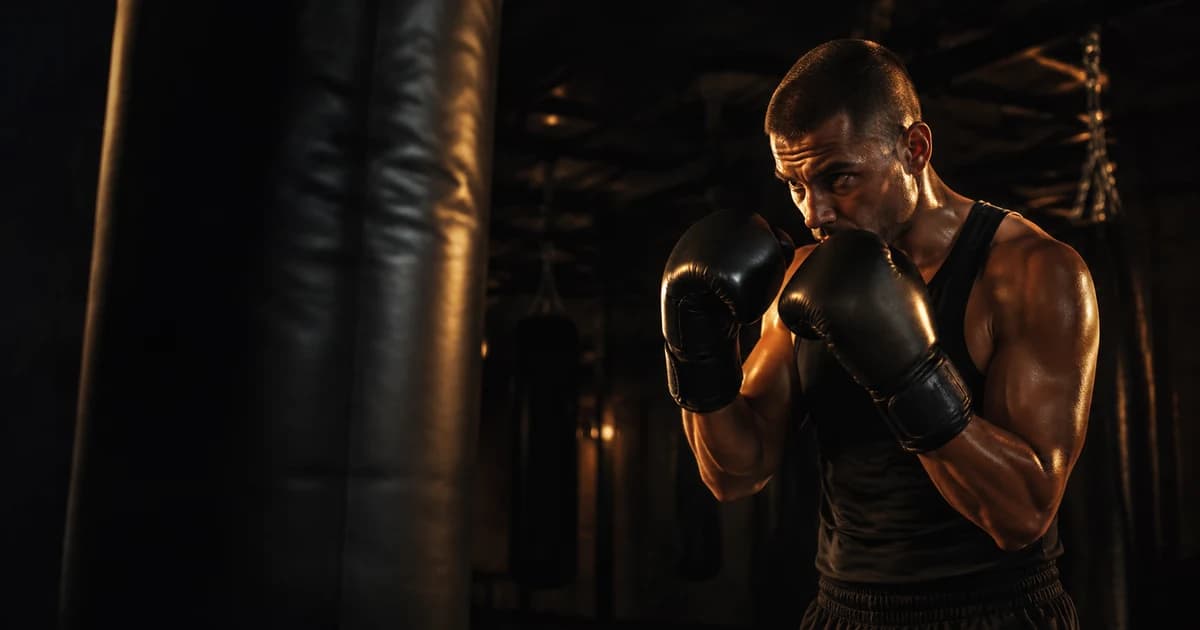
You telegraph a punch when you reveal a repeatable preparatory change early enough for an opponent to use. You cannot use solo video to prove what an opponent noticed. You can use it to see whether you repeatedly pull a glove backward, raise a shoulder, shift your weight, change your gaze, tense visibly, or pause your rhythm before the same punch.
Use video to identify the repeated preparation. Use controlled partner or mitt work to test whether another boxer can actually read it.
Record a true baseline

Record several seconds before the punch. Keep your gloves, head, shoulders, trunk, hips, and feet visible.
Do not begin each clip already posed for the punch. Record five seconds of ordinary stance and movement before the first action. Use a front-side 45-degree view that shows your gloves, head, shoulders, trunk, hips, and feet.
Throw the same single punch after several unpredictable delays. If you always count “one, two, three, punch,” the rhythm becomes part of the preparation.
In the IBA Coaches Manual, IBA instructors describe basic punch mechanics, defense, and progressive combination practice. Use that material as a technical baseline, but do not use it to decide whether another boxer can read one preparatory movement in your individual boxing.
Review the frames before you send the glove forward
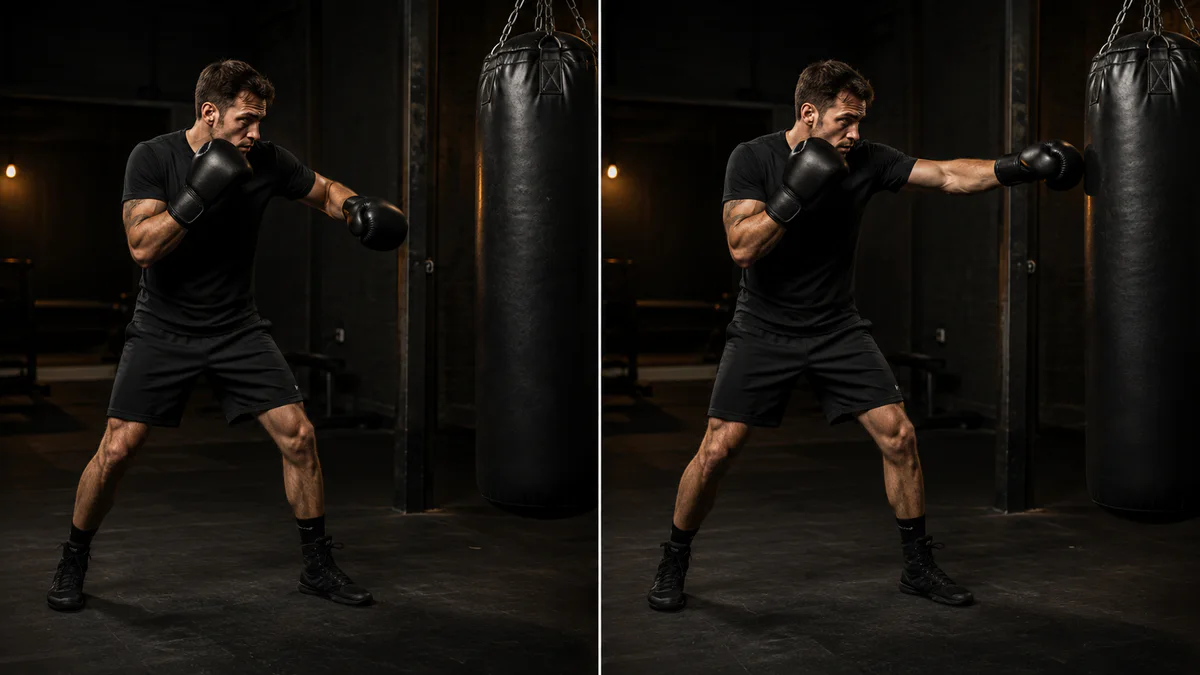
Review the frames before extension. Write the earliest repeated movement you can see, not what you assume an opponent perceived.
Review the half-second or several frames before initiation. Write only what repeats.
| Possible signal | Defensible observation | Claim you cannot make from solo video |
|---|---|---|
| Glove pull | “I moved my lead glove backward before four of five jabs.” | “Every opponent will counter my jab.” |
| Shoulder rise | “I raised my rear shoulder before each cross.” | “The shoulder movement causes slow punches.” |
| Weight shift | “I visibly loaded one side before every hook.” | “My force transfer is inefficient.” |
| Rhythm pause | “I stopped bouncing immediately before each punch.” | “The pause is always tactically wrong.” |
| Gaze change | “I looked at the body before every body jab.” | “My opponent definitely saw my eyes.” |
Choose the earliest repeated signal. Later changes may result from the punch rather than reveal it.
Remove one signal without becoming rigid
Glove pull
Hold your normal guard briefly, then send the glove toward a fixed target without first moving it away. Reduce speed. Ask whether the backward detour disappears.
Shoulder or elbow preparation
Use a relaxed starting position and a shorter range. Do not pin your shoulder or elbow into discomfort. Ask your coach whether the visible preparation belongs to the punch variation they teach.
Large weight load
Throw at technical intensity and compare your stance before initiation. Researchers who study punching biomechanics describe whole-body coordination, but you cannot use ordinary video to measure force production. Use the cross, hook, and uppercut study as research context, not a home diagnostic formula.
Predictable rhythm
Use randomized audio cues or ask your coach to vary the start signal. Do not increase contact. The goal is to separate the punch from your habitual count.
Gaze change
Keep broad visual attention on the task your coach sets. Do not stare at a body part or target merely to look deceptive. Ask whether you can see, defend, and act naturally.
Run an A/B recording
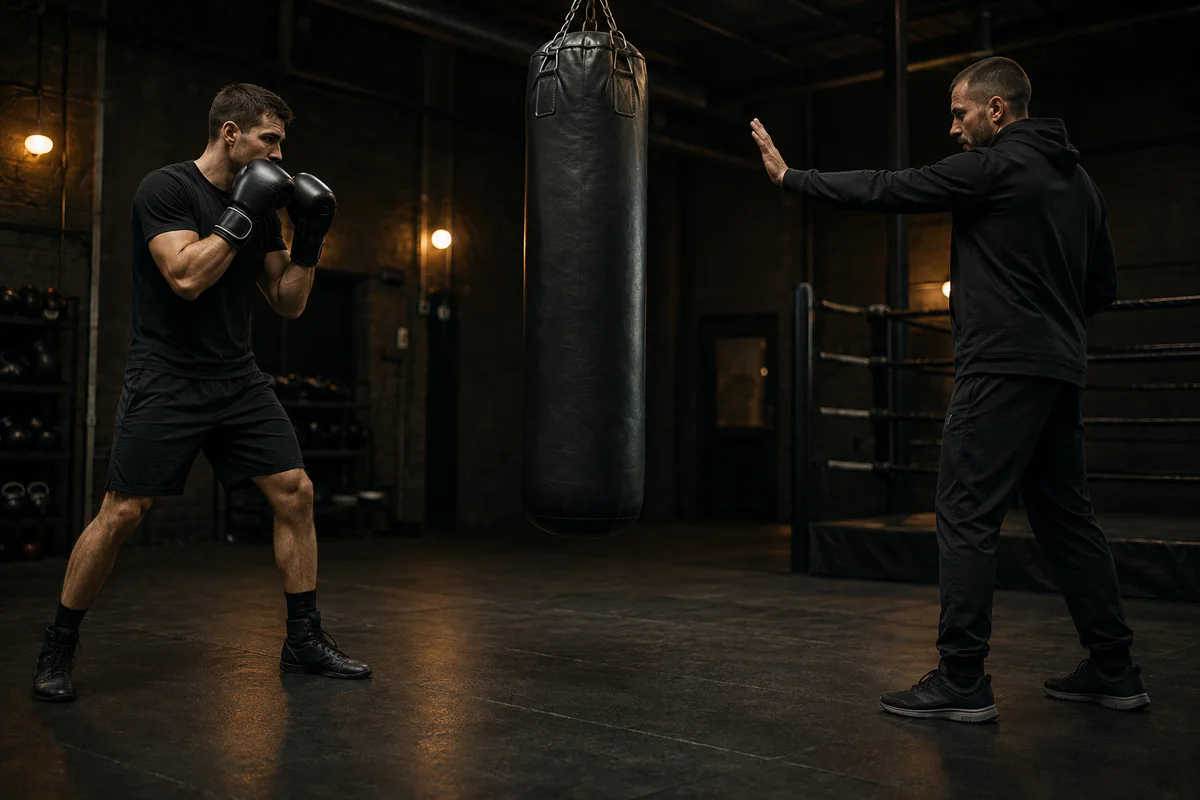
Compare self-selected timing with varied cues while you keep the punch, target, distance, and intensity stable.
Create two short sets:
- Set A: your normal punch after self-selected timing.
- Set B: the same punch after randomized spoken cues.
Keep the target, distance, camera, and intensity consistent. Compare only the preparatory signal. If it remains in both sets, timing alone did not remove it. If it disappears, repeat the test on another day before calling it a stable change.
Motor-learning literature distinguishes information about outcomes from information about movement performance. The augmented-feedback systematic review reports varied evidence across feedback modes and tasks. Use one observation per set instead of narrating every joint movement.
Test readability safely
Keep every partner or mitt test supervised, controlled, and limited to agreed cues. The partner can report which punch they predicted and which visible event informed the prediction. Keep intensity and contact within the conditions you set before the drill.
Do not tell a partner to counter freely so you can “prove” that you telegraph. Do not turn a technical observation into uncontrolled contact.
Follow the sparring guide when you set an agreed purpose, conditions, and supervision for sparring. Use the boxing combinations guide to add tactical variation after you establish a quieter single-punch baseline.
Distinguish deception from clean mechanics
Removing an unintended signal does not require hiding all movement. Feints deliberately create information. Tactical changes in rhythm, level, gaze, or guard may serve a purpose. State the drill intent before you classify any preparation as an error.
Use this protocol to investigate repeated pre-punch signals. Do not treat it as a promise that you can become unreadable or that one visual change will improve competition performance.
Review randomized-cue footage with Boxing AI
You can use Boxing AI for visible-technique review and your training record. You cannot use it to know what an opponent perceived, guarantee deception, or reproduce a controlled tactical test.
Build a signal-evidence log
Track one possible signal at a time:
| Field | What to record |
|---|---|
| Punch and task | Exact punch, target, range, and intended finish |
| Candidate signal | Glove pull, shoulder rise, load, gaze change, or rhythm pause |
| Timing | Before initiation, during initiation, or after the punch began |
| Repetition count | How often you observed it in comparable attempts |
| Cue condition | Self-selected timing or randomized cue |
| Partner evidence | Only what a coach-controlled observer actually reported |
Do not call the signal a telegraph until it repeats before the punch and another boxer confirms during a controlled live test that they can use it. Use solo footage to establish preparation, not perception.
Ask your coach whether the visible change is unnecessary, technically required, or a deliberate feint. Store purposeful feints separately. Otherwise an automated review system may learn to remove useful tactical variation.
Retest the revised punch with different cue intervals and on another day. Keep the punch, distance, target, and intensity stable. If you become rigid or delay the punch while trying to hide the signal, record that tradeoff. A quieter start only helps when you can still punch, defend, and move naturally.
Your pass standard
You pass the video screen when the unwanted preparatory signal no longer appears consistently under varied timing and you can still punch, defend, and move without excessive tension. You only pass the tactical test when repeated controlled partner work confirms that the signal became harder to use in the intended context.
Keep the original signal in your training record after you improve it. Label the punch, target, cue condition, camera angle, and date. Retest occasionally under coach-selected variation. If the signal returns only when you add range, pace, or a preceding punch, isolate that transition instead of restarting every part of the technique.
Ask your coach to approve the comparison before you increase speed or add partner pressure.