
Training
How to Train Boxing at Home: A Beginner Practice System
Build a safe beginner boxing routine at home with three weekly sessions, technical rounds, conditioning, video review, and clear limits on solo practice.
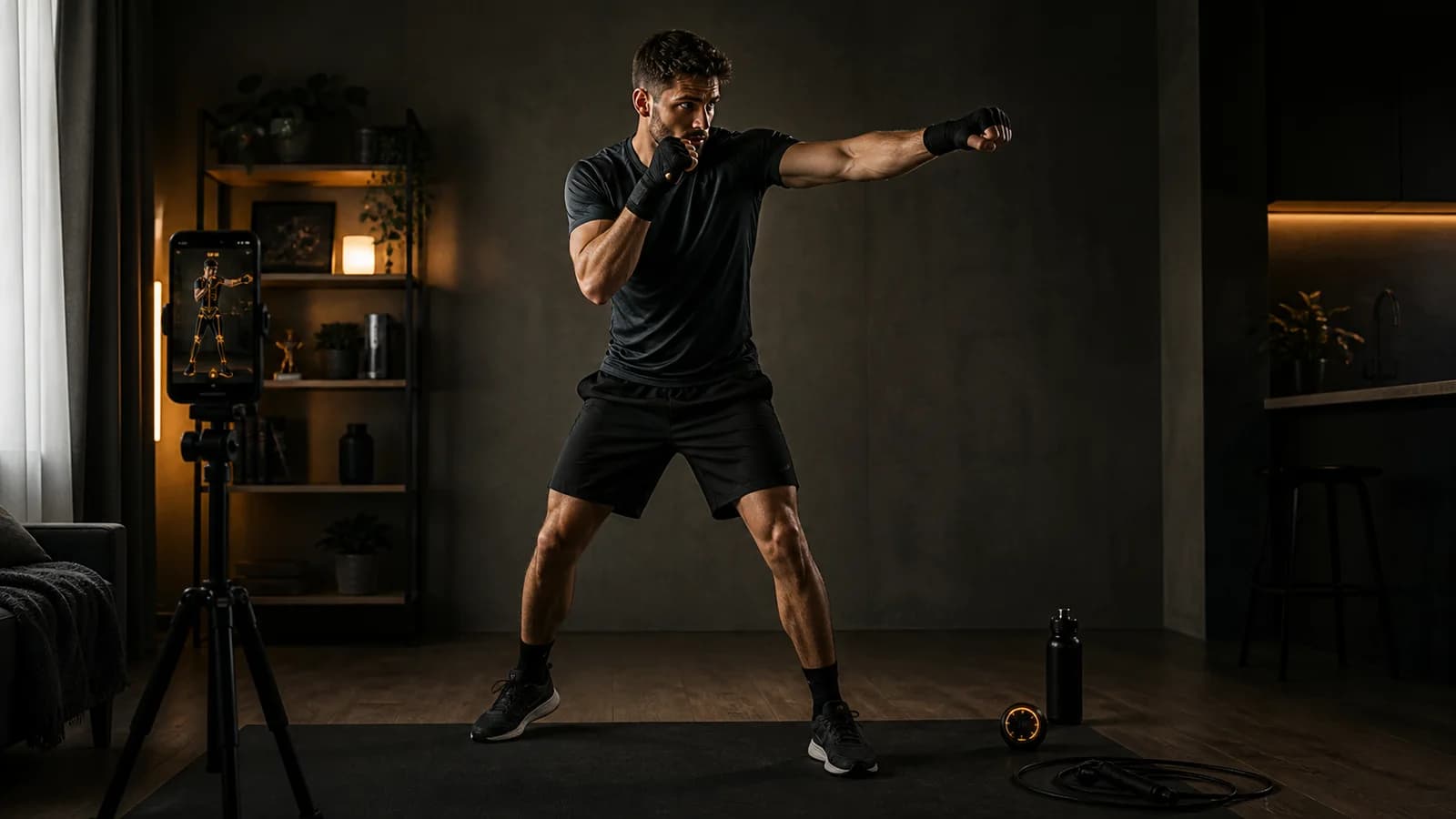
You can start boxing at home with three 30–40 minute sessions each week: warm up, practise one technical theme in short rounds, add simple conditioning, then review one filmed round. Build coordination and repeatable habits first. Home practice cannot replace a qualified coach, partner drills, supervised sparring, or the medical safeguards of a boxing club.
You do not need a heavy bag for the first phase. You need roughly 6 × 6 feet of clear, non-slip floor, comfortable training clothes, supportive shoes if the surface requires them, water, and a timer. Move furniture, pets, cables, and breakable objects out of your reach before you throw a punch.
Use the same four-part session every time
| Block | Time | Beginner focus |
|---|---|---|
| Warm-up | 6–8 minutes | Raise your temperature and rehearse easy movement |
| Technique | 12–16 minutes | One stance, footwork, or punching theme |
| Conditioning | 6–10 minutes | Controlled work that does not ruin your form |
| Review | 3–5 minutes | Note one success and one task for next time |
Start with 60-second work rounds and 30–60 seconds of rest. After two weeks of steady practice, move toward 90-second rounds. You do not need to copy three-minute competition rounds immediately. Shorter rounds let you stop before fatigue turns every repetition into a different movement.
The IBA Coaches Manual presents stance, movement, attack, and defense as connected skills. Your home plan should connect them too: establish a stable position, move without crossing your feet, punch without losing that base, then recover to a defensive position.
Warm up for the movements you will practise
Walk or skip lightly for two minutes. Continue with relaxed shoulder circles, controlled trunk turns, ankle movement, and small steps in your boxing stance. Finish with one easy shadowboxing round at half speed.
A warm-up prepares you to move; it does not guarantee that you will avoid injury. Stop if you feel pain, dizziness, unusual shortness of breath, or feel unwell. If you have a health condition or you are returning after an injury, ask a qualified health professional what level of exercise suits you.
Build week one around stance and movement
Use the boxing stance guide before your first technical round. Choose orthodox or southpaw based on the position you and your coach intend to develop, not because one feels more advanced.
Try this four-round block:
- Hold your stance, then take one small step forward and return.
- Step backward and return without bringing your feet together.
- Move left and right while keeping useful space between your feet.
- Combine one direction change with a calm guard reset.
Keep your head level enough to see the room, bend your knees without sitting too low, and move the foot closest to the direction first. Work slowly enough to notice when your stance becomes too narrow, too wide, or crossed.
Add the jab in week two
Use the jab technique guide and keep the drill simple. In round one, jab from a stationary stance and return the glove to guard. In round two, step with the jab. In round three, jab and step out. In round four, add a second jab only when you can recover after the first.
Do not punch the air at maximum speed or lock your elbow. Aim at an imaginary target at a believable distance. Keep the other hand available and finish balanced enough to move again. If the movement becomes untidy, reduce the speed instead of adding more combinations.
Turn skills into a three-day week
Use a schedule that leaves at least one easier day between technical sessions:
- Day 1 — stance and straight punches: movement rounds, jab rounds, then a light conditioning circuit.
- Day 2 — defense and exits: controlled slips, blocks, pivots, and a step out after every short combination.
- Day 3 — repeat and review: revisit the weakest theme, film two comparable rounds, and choose next week’s priority.
For conditioning, use movements you can perform with control: brisk marching or skipping, squats to a comfortable depth, incline push-ups, and short plank holds. Choose quality over exhaustion. Boxing practice suffers when a conditioning circuit leaves you unable to hold your stance or recover your hands.
The Boxing Session Builder can arrange the rounds without turning the session into a random list. Give each round one job. “Return my jab hand before I step out” guides practice better than “improve everything.”
Film one round, not the whole workout
Place your phone on a stable tripod outside your movement area, about 6–10 feet away. Make sure the frame shows both feet and both hands. Film one normal-speed round from a front three-quarter angle; use a side angle on another day if you need to inspect posture or reach.
Review the start, action, and recovery. Use the video form-check method to compare like with like. A clip can show balance, order, and visible positions. It cannot tell you how you react to an opponent, whether your punch has real impact, or why something hurts.
Know what you cannot learn alone
Solo rounds can build stance familiarity, coordination, rhythm, basic conditioning, and the habit of reviewing your work. They cannot recreate a partner’s distance, timing, pressure, feints, contact, or unpredictable decisions. Do not improvise sparring with an unqualified friend at home. Join a reputable club when you want partner drills, pad work, bag coaching, or sparring.
Ask a qualified coach to check your fundamentals before you make hard, fast repetitions permanent. If you compete, follow USA Boxing or your event’s current rules, coaching requirements, and medical clearance process. Home video does not clear you to spar or compete.
Never train through headache, confusion, balance problems, vomiting, vision changes, or other symptoms after a hit to the head. Stop and seek urgent medical guidance. The CDC’s HEADS UP guidance explains concussion signs and symptoms; an article, coach, or app cannot diagnose you.
Progress only one variable at a time
For your next four weeks, increase either round length, movement complexity, or speed—not all three together. Keep a short record after each session:
- What stayed repeatable?
- What failed first when you became tired?
- What one task will you test next time?
After three consistent sessions, compare a new clip with the original under the same angle and drill. Progress means you can repeat a useful position and recover from it, not that you can survive a more chaotic workout.
Bottom line: train boxing at home with a small clear space, three structured weekly sessions, one technical theme at a time, and one filmed checkpoint. Use home practice to prepare better questions and cleaner repetitions, then use qualified coaching for contact, tactics, and corrections you cannot verify alone.