
Training guide
Orthodox vs Southpaw: How to Choose Your Boxing Stance
Choose orthodox or southpaw by testing balance, vision, lead-hand control, rear-side power, and movement under repeatable conditions.
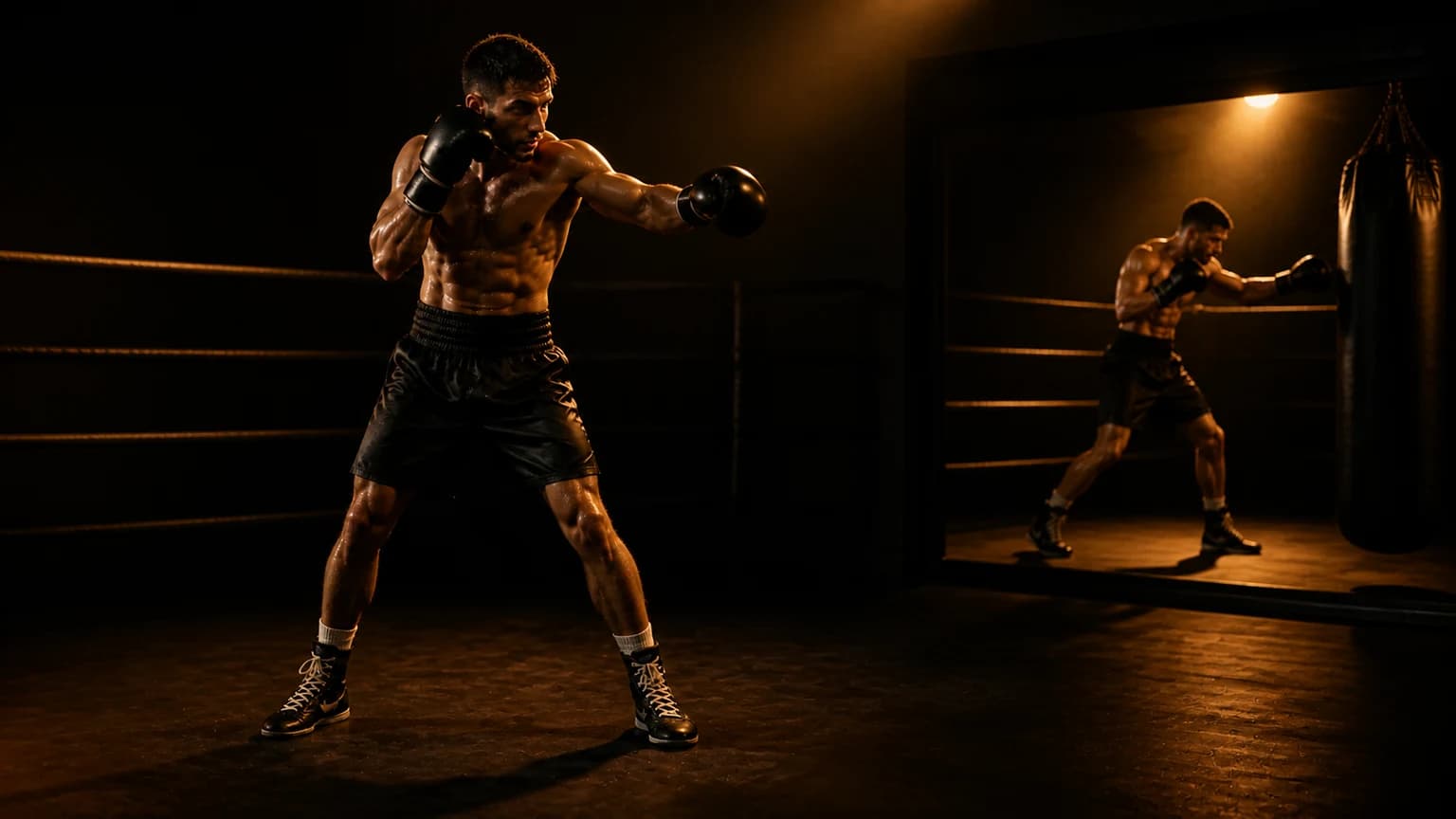
Boxing AI: Ring Coach helps you film, compare, and log your stance work. To choose orthodox or southpaw, test your balance, vision, lead-hand control, rear-side power, and movement under the same conditions. Do not choose from writing handedness alone. Choose the stance that lets you repeat sound positions, defend safely, and learn efficiently with qualified coaching.
The short answer
Orthodox places your left foot and left hand forward, with your right side behind. Southpaw reverses that arrangement. Neither stance automatically suits every left-handed or right-handed boxer.
Start with a coach-led comparison. Use the same gloves, floor space, camera angle, drill, and effort level. Test each stance at low speed before you add contact or fatigue. Keep the stance that gives you the clearest vision, the most stable base, and the cleanest recovery after punches and directional changes.
England Boxing’s coaching material treats stance as part of a connected system of balance, movement, punching, defence, and positioning. Read the Level 2 Coaching Handbook alongside advice from your coach, not as a substitute for in-person assessment.
Four checkpoints that matter
| Checkpoint | Orthodox or southpaw test | What you record |
|---|---|---|
| Balance | Step forward, backward, left, and right without crossing your feet or rising excessively | Which stance keeps your weight centred? |
| Lead-hand control | Touch a target, retract the hand, and keep your head and hips organised | Which stance gives you a more reliable jab and guard recovery? |
| Rear-side power | Throw a controlled rear straight without over-rotating or falling onto the front foot | Which stance produces force without losing position? |
| Vision and defence | Move your head, block, parry, and change direction while keeping the target in view | Which stance helps you see and respond earlier? |
Treat each observation as evidence, not a verdict. If the camera cannot show your feet, shoulders, and target clearly, mark that checkpoint as unknown.
A repeatable stance test
- Prepare. Ask a qualified coach to check your space, wraps, gloves, intensity, and starting position. Remove obstacles and avoid live contact for the first comparison.
- Rehearse orthodox. Spend several low-speed rounds on stance recovery, a basic jab, a rear straight, a step in, and a step out. Keep the movements controlled.
- Record orthodox. Film from an angle that shows your feet, hips, shoulders, hands, and target. Use two or three comparable attempts rather than one impressive repetition.
- Repeat southpaw. Use the same drill, distance, camera position, and approximate effort. Do not change several variables between tests.
- Review the earliest breakdown. Look first for a crossed foot, lifted heel, falling weight, exposed chin, slow lead-hand return, or rear hand that finishes outside your stable base.
- Choose one adjustment. Change one cue, such as stance width, weight distribution, or lead-hand return. Repeat the same drill before reaching a conclusion.
Your first session can identify a promising starting stance. It cannot prove that you should permanently switch. Revisit the comparison after coaching, technical development, or a meaningful change in your training demands.
Common mistakes
Choosing from handedness alone
Your dominant hand may influence coordination, but it does not decide your best boxing stance. Boxing asks each side to perform different jobs: the lead side manages distance and information, while the rear side supports rotation and power. Test those jobs directly.
Switching whenever a round feels awkward
Every new stance feels unfamiliar. Frequent switching prevents your nervous system from building reliable footwork and defensive reactions. Keep one stance for a defined practice block, then compare recordings instead of trusting the discomfort of a single round.
Testing power first
A hard rear hand can hide a poor base. If you fall forward, lose your guard, or cannot recover your feet, the power test tells you little. Establish balance and vision before you evaluate force.
Blaming stance for a footwork error
A crossed foot, narrow base, or poor turn may reflect a movement habit rather than the stance itself. Isolate the step, slow it down, and ask your coach to identify whether the problem comes from technique, mobility, fatigue, or the chosen arrangement.
What video can and cannot decide
Video can show position, timing, sequence, distance, balance, and repeatability. It cannot diagnose an injury, measure internal effort, confirm what you saw in the moment, or replace a coach watching your movement in context. A single camera angle also misses information outside the frame.
Use the Orthodox vs Southpaw stance checker to organise your observations and compare inputs. The tool can suggest a starting direction from the information you provide. It cannot decide your competitive eligibility, medical safety, long-term stance, or what a particular coach, federation, promotion, age group, school, or event requires.
After you understand the framework, open Boxing AI: Ring Coach and record one representative stance drill from a stable coaching angle. Review the earliest checkpoint that changes, save one concrete observation, and test one cue in the next comparable attempt.
Safety and rules limits
Follow your current gym, federation, promotion, and event requirements. England Boxing publishes coaching guidance, but another organisation, age group, competition, or local event can apply different rules. Check the current document that governs your activity.
Stop immediately if you feel pain, dizziness, numbness, loss of coordination, or unsafe pressure. Get qualified in-person guidance before sparring, competing, attempting submissions in any combat-sport context, lifting maximally, changing weight, or returning after injury.
Frequently asked questions
Does left-handedness mean I should box southpaw?
No. Handedness gives you a reason to test both arrangements, not an automatic answer.
Can one video prove my stance is correct?
No. One video supports narrow observations. Use repeated attempts and qualified coaching.
Should I change stance during sparring?
Only with a coach’s guidance and a clear technical purpose. Do not switch because one exchange feels uncomfortable.
Is the stance checker an official rules calculator?
No. Verify all competition and eligibility decisions against the current governing document and event organiser.