
Defense
How to Return to Guard After a Boxing Combination
Review the transition after your final punch, restore a usable defensive position, and connect the combination to a planned exit.
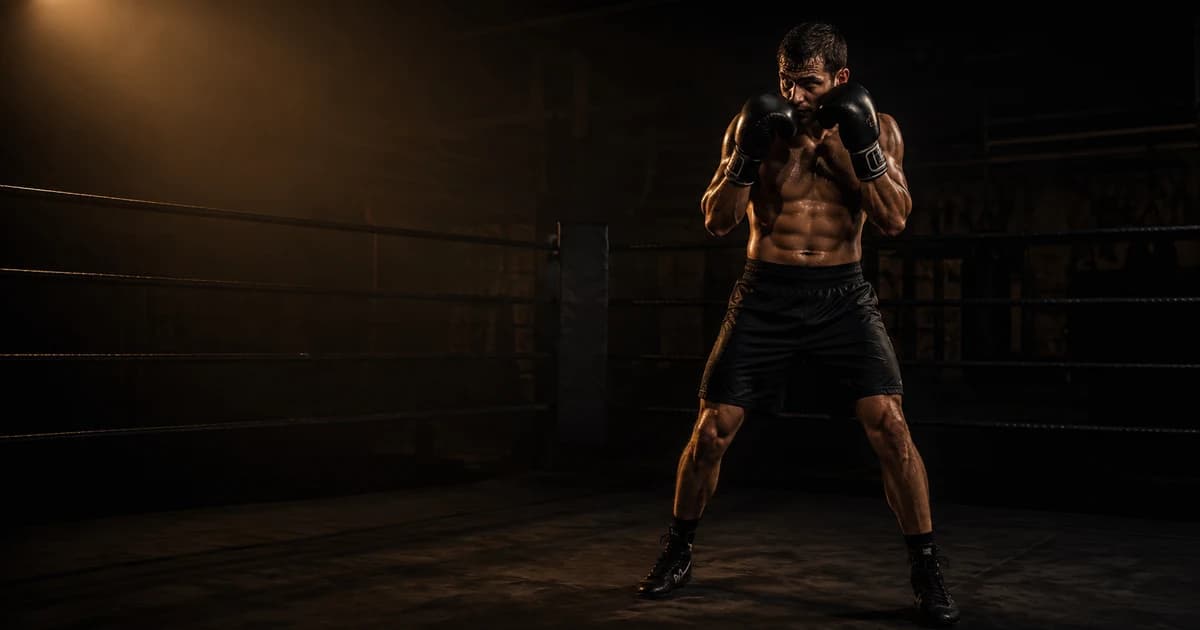
Return to guard after a boxing combination by treating recovery as part of the sequence, not as something you do after the drill ends. Define the defensive or movement action that follows the final punch. Then record whether you regain a usable position before the next demand arrives.
You do not need to recreate your starting frame pixel for pixel. Boxing changes distance, angle, stance, and tactical position. You need a defensible finish that matches the task your coach set.
Define what “guard” means in this drill
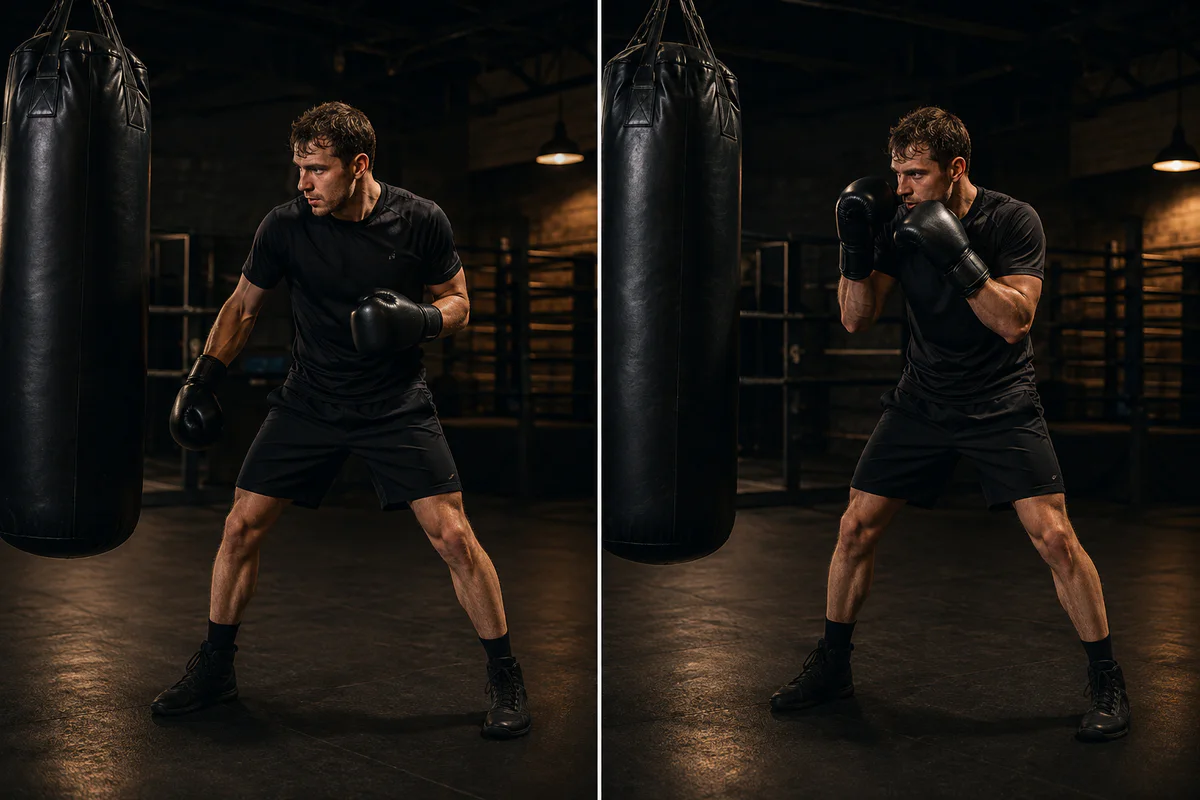
Define the finish with your coach. Do not grade every style against one universal glove height.
Ask your coach to specify the finish:
- Both gloves return to a conventional baseline.
- The final punch flows directly into a block, catch, slip, or roll.
- You exit while restoring the defensive position.
- You change angle and finish ready to punch again.
Without a declared finish, you may mistake an intentional transition for a failure to reset.
In the IBA Coaches Manual, IBA instructors describe basic punches with prompt returns and identify low, sideways, or slow retractions as common errors. They also progress from single punches to combinations with movement. Use those fundamentals inside your coach’s defensive system.
Film the transition after the last punch
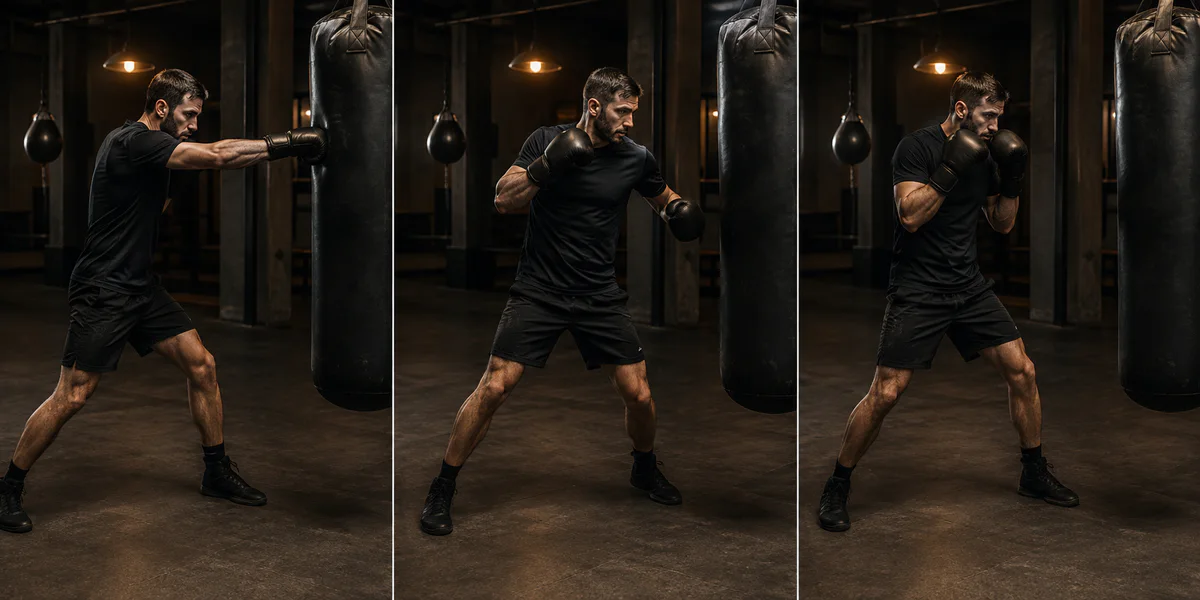
Keep recording after the final punch. The recovery begins where most short clips end.
Use an open-side 45-degree view that keeps both gloves, your head, torso, hips, and feet visible. Record several seconds after the final punch. Many clips end at bag contact and hide the exact phase you need to review.
Write the combination and finish before you start:
Sequence: jab, cross, lead hook
Finish: both gloves recover, one step right
Target: heavy bag
Pace: controlled
Keep the camera, target, distance, and pace consistent across the baseline and correction sets.
Review the sequence backward
Start at the finish and move backward through the clip.
- Can you execute the planned exit or defense?
- Where are both gloves immediately before that action?
- Does the final punch return on a useful path?
- Did the preceding punch change your distance or stance?
- Did the entry already create the recovery problem?
This backward review prevents you from blaming the final glove when an earlier distance or stance error created the problem.
Fix the exact transition
You leave the final glove extended
Shorten the sequence to the final punch alone. Touch the target at controlled speed, recover, and perform the declared next action. Do not add the earlier punches until you can complete that finish.
You retract below the defensive position
Use one task: return along the delivery path into the guard or defense your coach selected. Compare the farthest controlled reach with the next two frames. Avoid forcing your shoulder through pain.
You lower the opposite hand during the final punch
Review that hand separately. The rear-hand lead-hook protocol provides a narrower diagnostic when the final punch is a lead hook.
You finish off balance
Remove one punch and retest. Use the falling-forward protocol when you need an unplanned step before you can defend or move.
Use a recovery-first drill

Restore a usable defensive position before you admire the combination. Then take the planned exit step.
Build the sequence from the final action:
- Start in the expected post-punch position and perform the exit.
- Add the final punch, recover, and exit.
- Add the preceding punch only after the shorter sequence works.
- Continue until you restore the full combination.
This approach gives each added transition a clear test. It does not replace your coach’s combination design.
Avoid the static-guard trap
A usable guard changes with distance and action. Do not freeze both gloves at your cheeks while ignoring vision, movement, body defense, or the next tactical task. The baseline drill establishes responsibility for both hands. Your coach decides when a slip, block, frame, angle change, or follow-up punch replaces the static position.
Follow the boxing sparring guide when you need controlled partner work with explicit conditions and direct supervision. Do not test a new return-to-guard correction by inviting unsupervised contact.
Apply research honestly
The cross, hook, and uppercut biomechanics study describes coordinated body-segment contributions to punching. The lower-limb kinetics study reports that fatigue can affect punch force and lower-body performance. These findings support reviewing the whole sequence and recording fatigue context.
Those findings do not justify using phone video to measure force, predict a counter, or diagnose why your recovery changed. Record the round, task, intensity, and rest period so you can compare like with like.
Use Boxing AI for the final transition
You can use Boxing AI to review visible boxing technique. You cannot use it to observe threats outside the frame, measure impact, prescribe medical care, or replace your coach’s tactical judgment.
Record a finish-state card
Use one card per combination:
Declared sequence:
Final punch:
Assigned defensive finish:
Assigned movement finish:
First frame where recovery changes:
Repetitions completed without adjustment:
One revision:
Coach decision:
The card prevents you from calling every glove position after contact “the guard.” Your coach defines the finish for the task. Record whether you met it and whether you could complete the movement that followed.
Use normal-speed footage to judge rhythm and readiness. Use slow motion only to locate the transition. If you pause on an unusual frame between actions, confirm that the position persists or repeats before treating it as a technical problem.
Compare a typical repetition, not only the worst or best take. Ask your coach whether an earlier distance or stance change created the recovery failure. If they change the sequence, target, or finish, record a new baseline rather than comparing unlike tasks.
Retest on another day and with one extra layer. Choose pace, movement, or a controlled defensive cue. Do not add all three at once. A useful return must survive the next appropriate task, not merely look correct while you hold still.
Compare readiness, not cheek contact
Do not grade the finish only by whether both gloves touch your cheeks. Ask whether you reached the defensive position your coach assigned and whether you could perform the declared next action. A compact catch, a frame, an angle change, or another punch may require different positions.
Record three finish tests after the same combination:
- Return and hold briefly at technical pace.
- Return and take one coach-selected exit.
- Return and respond to one controlled verbal cue.
Keep the combination, target, and pace unchanged. If you succeed while holding but fail when you move, review the transition into the exit. If you fail before any cue, shorten the combination and find the earliest punch after which you stop recovering.
Write the observable result instead of a general score. “I needed an extra step before the exit in two attempts” gives your coach more useful evidence than “my guard was bad.” Repeat the comparison on another day before treating the revision as stable.
Your pass standard
You pass when you can finish the combination and complete the declared defensive or movement action across several controlled repetitions. Once you can reproduce that transition, ask your coach to reintroduce pace and complexity.
Archive the baseline and accepted retest under the same combination name. Add the date, intensity, and final task. When you revisit the sequence, compare the new attempt with the accepted version before changing another variable. This gives you and your coach a durable standard instead of a memory of one successful round.